
Yard drainage is the system of slopes and water paths that decides where rain and snowmelt go on your property. When it works, water leaves quietly and you never think about it. When it fails, you get the familiar Central Massachusetts lineup: puddles that will not leave, lawn that squishes underfoot into June, and the slow creep of water toward the basement. This guide explains what yard drainage is, how to read the signs of trouble, and what the corrections actually involve. It is the same work we do every week through our Central Massachusetts drainage and grading services, explained in plain language.
This post is part of our drainage series. For the full picture of how slopes and water control protect a property, start with our pillar guide to what drainage and grading is.
What Is Yard Drainage, Exactly?
Yard drainage is two things working together: the shape of your ground and the exits your water has. The shape, the grading, decides which way water moves the moment it lands. The exits, surface channels and buried piping, give moving water somewhere safe to end up. Every wet-yard problem is a failure of one or both: ground that sends water the wrong way, or water with no path out that pools where it stops.
Most properties inherit their yard drainage rather than design it. Builders grade a lot once, then decades of settling, additions, landscaping, and neighboring changes rework the water paths nobody is watching. The lawn that drained fine for twenty years starts holding water not because something broke, but because a hundred small changes finally added up. That is why diagnosis, not guesswork, starts every real yard drainage correction.
Signs Your Yard Has a Drainage Problem
The ground tells you early. Puddles that linger more than a day after rain. Grass that thins and yellows in the same low spots every year. Ground that stays spongy long after the surface looks dry. Moss taking over sections of lawn. A basement that smells musty after storms, or efflorescence lines on the foundation walls. Mosquitoes concentrating in one corner of the yard. Each is the property reporting where water sits instead of moving, and the pattern of signs maps the problem better than any single one.
What Causes a Wet Yard
Flat or settled grading is the most common cause: ground without enough slope to shed water, or ground that settled into hollows over the years. Compacted and heavy soils are next, common across Central Massachusetts where dense glacial till drains slowly on its best day. Roof water is the quiet contributor, four downspouts concentrating an entire roof’s rainfall into four spots beside the foundation. And sometimes the water is not yours: uphill neighbors, road runoff, and natural springs all deliver water your yard is expected to handle.
Surface Corrections
Surface fixes reshape how the ground itself moves water. Regrading, covered in depth in our residential excavation guide, rebuilds the slopes so the lawn sheds toward safe exits instead of storing water in hollows. Swales, broad shallow channels, collect and carry runoff along planned routes. Low spots get filled and blended into the surrounding pitch. Downspout extensions and splash management move roof water away from the foundation before it soaks in. Surface work solves the majority of residential yard drainage problems on its own, because most wet yards are shape problems before they are anything else.
Subsurface Corrections
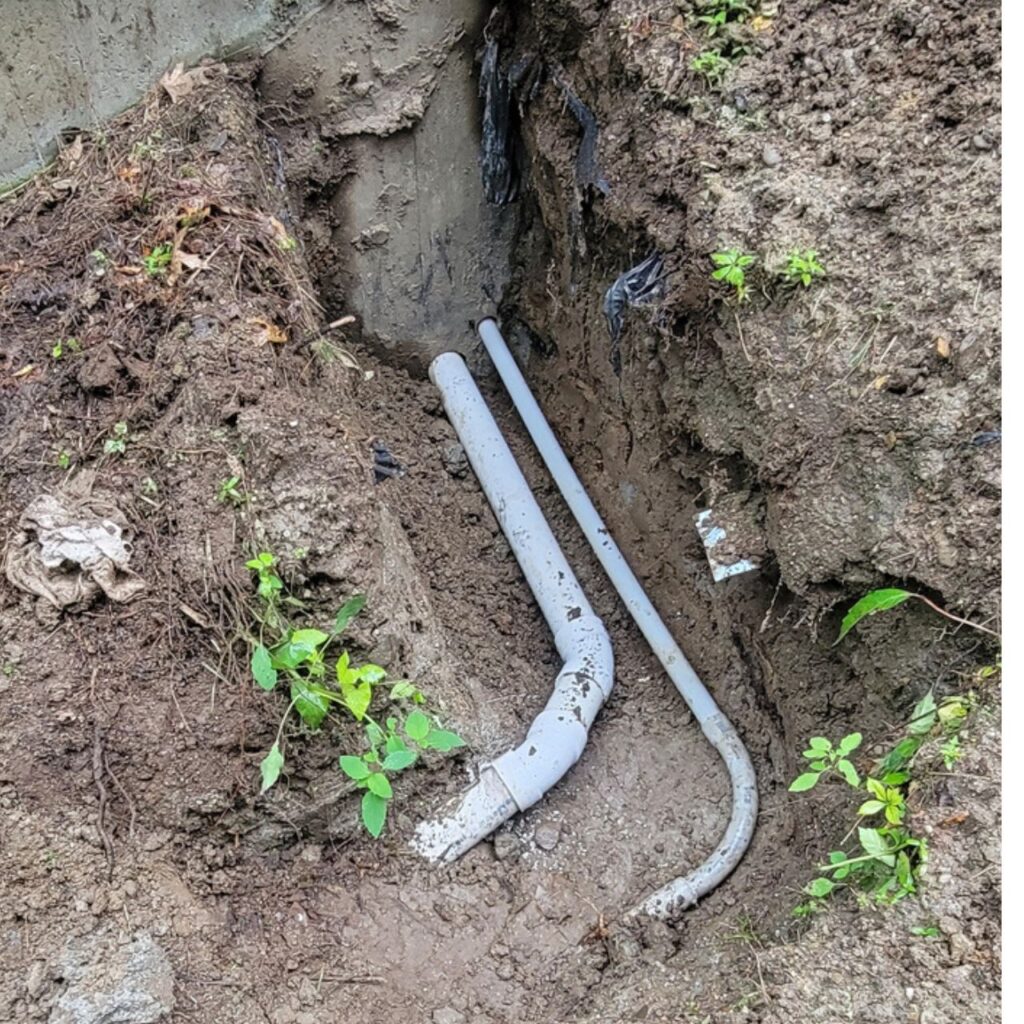
When surface reshaping is not enough, the fix goes underground. French drains collect water moving through soil and carry it away in perforated pipe. Solid piping moves roof and surface water to daylight or a dispersal area. Dry wells give collected water a place to soak away slowly. Subsurface work is precision work: depth, pitch, and outlet placement decide whether a buried system works for decades or silts up in five years, and it starts with a Dig Safe notification like any other digging in Massachusetts.
After the Fix: Keeping Water Moving
Yard drainage corrections last when the property owner knows what was built and what it needs. Surface systems want simple upkeep: swales kept clear of leaves and mowing debris, downspout extensions reconnected after winter, low spots watched for new settling. Subsurface systems want their outlets checked seasonally, because a buried pipe is only as good as the daylight end where water exits. None of it is more than an hour a season, but skipping it for years is how well-built systems earn unfair reputations.
It also pays to re-read the yard after big changes. A new patio, a pool, an addition, or even a neighbor’s regrading upstream all rewrite the water paths that the original correction was designed around. The properties that stay dry treat yard drainage as a system they own rather than a repair they bought once, and a quick walk during a hard rain, watching where water actually goes, tells you more than any inspection on a dry day.
Seasonality is worth planning around in this region. Spring exposes every weakness while the ground is saturated and the snowpack drains, which makes March and April the best diagnostic months and the worst construction ones. Summer offers dry ground for building but hides the problems that only appear under sustained water. The practical rhythm for Central Massachusetts properties: observe and diagnose in spring, correct in summer and fall, and verify the first spring after the work. A correction that survives its first snowmelt season with dry ground where the puddles used to live has passed the only test that matters.
The last habit worth building: match the fix to the observed problem, not the assumed one. Water arriving from a neighboring slope calls for interception, not just a drain at the puddle. Roof water pooling at the foundation calls for routing, not regrading the whole lawn. Reading the cause before buying the cure is the entire craft of yard drainage in one line, and it is why diagnosis opens every project we run.
If you are unsure where your property stands, start with one storm’s worth of observation. Ten minutes outside during a hard rain, watching where water enters the property, which way it travels, and where it stops, produces the exact map a yard drainage contractor needs for the first conversation. Bring those observations to the estimate walk and the diagnosis starts halfway done, which makes the plan sharper and the visit more useful.
In Massachusetts, Watch Out for These
The Wetlands Protection Act governs work near wetlands, streams, and ponds, including drainage work, with buffer zones that reach 100 feet. A wet corner of the yard is sometimes a jurisdictional wetland rather than a drainage problem, and knowing the difference before digging protects you from an expensive conversation with the conservation commission. Any subsurface work also means notifying Dig Safe at 811 at least 72 business hours before digging, which a professional contractor handles as part of the job.
The region’s ground adds its own rules. Ledge sits near the surface across much of Central Massachusetts and blocks water from draining downward, forcing lateral solutions. Dense glacial soils absorb slowly and give up water slower. And the spring snowmelt delivers weeks of sustained water that summer thunderstorms never test a system with, which is why corrections designed around a July rainstorm can still fail in March.
Frequently Asked Questions
Yard drainage rewards early attention more than almost any other property system, because water damage compounds quietly until it is structural. Our Central Massachusetts drainage and grading team diagnoses and corrects yard drainage across Grafton, Worcester, Shrewsbury, Northborough, and the surrounding towns, and estimates are always free. Request a free estimate and we will read your water with you.