Regrading and slope correction is the earthwork that reshapes the ground around a home so water runs where it should and the soil stays where it belongs. It is the same work we handle every week through our Central Massachusetts drainage and grading service, and it quietly sits behind a long list of homeowner headaches: wet basements, eroding banks, settling patios, and lawns that never seem to dry out. This guide explains what regrading and slope correction actually involves, when a property needs it, and the rules Massachusetts adds once the ground being reshaped sits anywhere near water.
What Is Regrading and Slope Correction, Exactly?
Grade is simply the shape of the ground: which way it tilts, how steeply, and where the low points sit. Regrading and slope correction is the work of changing that shape on purpose. Regrading means cutting soil off the high side and moving it to the low side until the surface pitches the way it needs to. Slope correction is the same idea applied to a bank or hillside that is too steep, sliding, or washing out, reshaping it to an angle that will actually hold.
The two belong together because water and gravity are one problem seen from two directions. A yard that drains toward the house and a bank that sheds its topsoil after every storm both come down to ground that is shaped wrong. Regrading and slope correction fixes that shape so water leaves in a controlled path and the soil has no reason to move. It is one focused piece of the broader ground shaping covered in our guide to drainage and grading.
Why Yards and Lots End Up Draining the Wrong Way
Very little residential ground was ever graded with drainage in mind. Builders rough in a lot to get a house on it, backfill settles unevenly for years afterward, and later projects like patios, additions, and driveways each nudge the grade a little further off. Frost heave, tree roots, and ordinary erosion finish the job. The result is negative grade, ground that tilts back toward the foundation instead of away from it, which is exactly the condition regrading and slope correction exists to reverse.
Central Massachusetts adds its own reasons. Much of the region sits on dense glacial till and ledge that sheds water rather than soaking it up, so whatever the surface does not carry away tends to pool. A lot in Grafton or Shrewsbury can look flat to the eye and still send every heavy rain straight at the basement wall. That gap between how a yard looks and how it drains is what regrading and slope correction is meant to close.
Establishing Positive Drainage Away From the Foundation
The first goal of regrading and slope correction is positive drainage: ground that falls away from the house on every side. The working standard is roughly six inches of drop over the first ten feet out from the foundation, then a gentler continued fall beyond that. It is a small slope, barely noticeable underfoot, but it is the whole difference between water that walks away from the wall and water that leans against it.
Getting there is rarely as simple as piling soil against the house. If the grade only rises near the foundation, water still has nowhere to go once it reaches the low ring around the yard. Sound regrading and slope correction reads the entire lot first, finds where water actually wants to exit, and shapes a continuous path to that exit instead of just building a mound at the wall.
Cut and Fill: How a Grade Actually Gets Reshaped
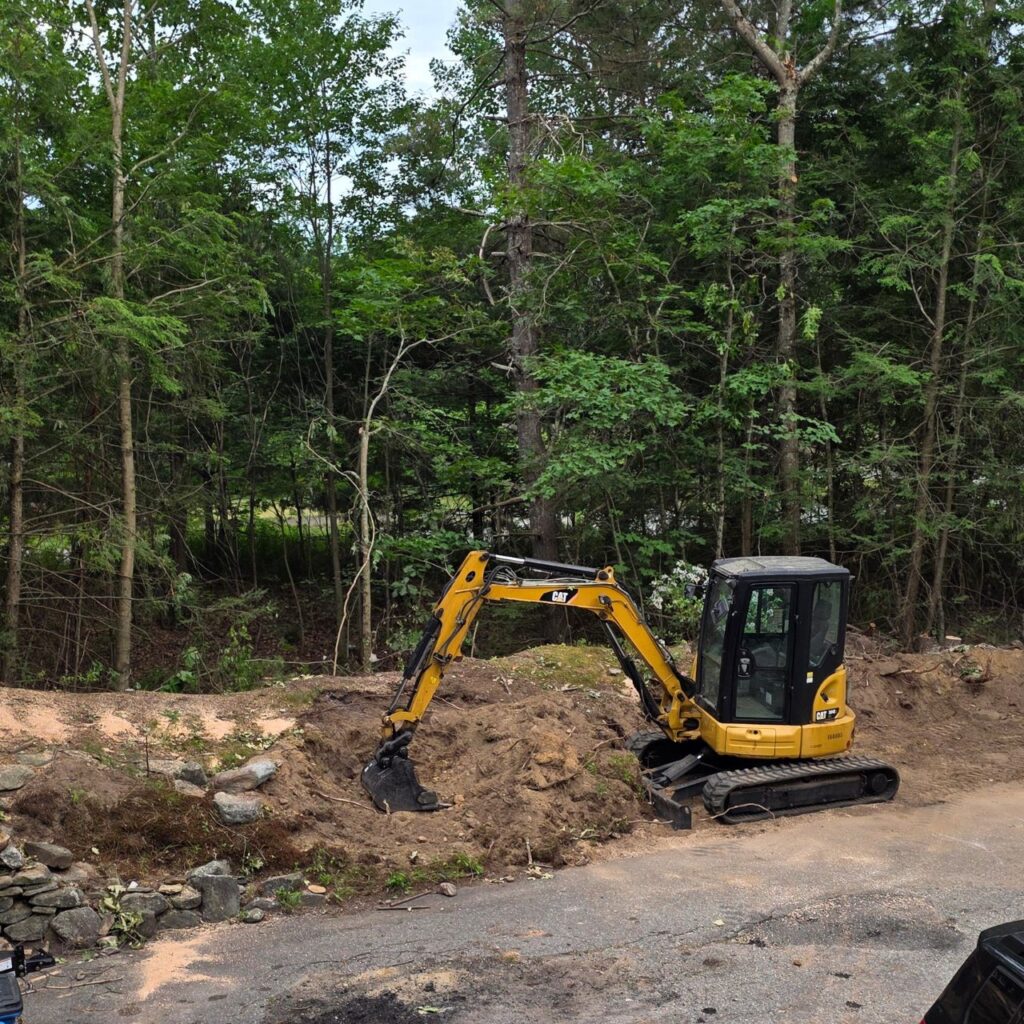
Reshaping a grade is a balance of cut and fill. Soil is stripped from the high areas, which is the cut, and placed in the low areas, which is the fill, until the surface matches the target shape. Topsoil is usually set aside first and returned last so the finished grade can still grow grass. On a well planned job the cut and fill roughly balance out, which keeps material from having to be trucked in or carted away. That balance is the quiet efficiency behind good regrading and slope correction.
The part homeowners tend to underestimate is compaction. Fill that is simply pushed into a low spot will settle over the next year or two and recreate the very dip it was meant to erase. That is why regrading and slope correction places fill in layers and compacts each one, so the corrected grade is still the corrected grade a few winters later.
Slope Correction on Steep and Eroding Ground
A slope that is washing out is a grade problem with a clock on it. Every storm carries more soil downhill, the bank grows steeper at the top and buries whatever sits at the bottom, and bare ground has nothing left to hold it in place. Slope correction reshapes that bank to a stable angle, one shallow enough that soil and vegetation can stay put, then stabilizes the surface so the repair survives the next wet season.
Reshaping alone is not always enough. On a corrected slope, the new surface usually needs cover fast, whether that is seed and erosion control matting, plantings whose roots knit the soil together, or stone where water moves too hard for anything to grow. Matching the surface to how fast water runs across it is the quiet half of slope correction, and it is where a reshaped bank either lasts or slides again.
Swales, Berms, and Where the Water Goes Next
Reshaping the ground answers where water leaves, but the water still has to go somewhere. A swale is a shallow, gently pitched channel, usually grassed, that gathers surface water and walks it to a safe outlet. A berm is the opposite, a low ridge of soil that blocks or redirects water before it reaches something you want to protect. Most regrading and slope correction jobs use some mix of the two to steer runoff without a single length of pipe.
Where the water finally lands matters as much as the grade itself. A drainage swale that dumps onto a neighbor lot or straight at a wetland only trades one problem for a bigger one. Part of planning regrading and slope correction is choosing an outlet that can genuinely take the flow, whether that is a drainage easement, a rain garden, a dry well, or a stretch of the property built to hold water and release it slowly.
Retaining Walls and Terracing for Slopes That Cannot Be Regraded
Sometimes there is no room to lay a slope back to a gentle angle. A driveway, a property line, or an existing structure fixes the top and bottom of a bank in place, and the only way to hold the ground between them is to build against it. A retaining wall does exactly that, turning a bank that wanted to slide into a defined step that stays put. This is regrading and slope correction at its most structural.
On a tall or long slope, one wall is often replaced by terracing, a series of shorter walls that break a single steep face into stepped levels. Terracing spreads the load, gives each level its own manageable slope, and creates usable flat ground where there was only a hillside. Retaining and terracing are where slope correction stops being pure earthwork and becomes structure, which is also where drainage behind the wall turns critical.
Why Compaction and Settling Decide Whether Regrading Lasts
The most common way a regrade fails is not dramatic. It simply settles. Soil placed as fill holds air and moves as it consolidates, and if it is not compacted as it goes in, the surface drops unevenly and the careful pitch slides back into a low spot. This is why soil compaction is treated as part of the shape itself, not a finishing touch added at the end.
Done properly, regrading and slope correction places fill in controlled layers, compacts each layer, and allows for the small amount of natural settling still to come. A regrade that looks flawless the week the machines leave means little on its own. A regrade that still drains correctly after two or three Central Massachusetts winters is the one that was actually built right.
What Regrading and Slope Correction Protects
The payoff shows up in the parts of a property nobody wants to think about. Dry basements and crawlspaces, because water is leaving the foundation instead of gathering against it. Stable banks and lawns that keep their topsoil where it belongs. Patios, walkways, and driveways that sit on ground that no longer shifts beneath them. Regrading and slope correction is rarely the reason someone first calls, but it is often the reason the expensive things above it survive.
It also protects the work around it. New drainage, a fresh driveway, a deck, or a foundation repair all assume the ground beneath them is shaped correctly and will stay that way. When the grade is wrong, those projects inherit the problem. That is why regrading and slope correction is usually the first fix on a wet or shifting property, not the last. When the surface water problem is bigger than the grade alone, our guide to standing water solutions covers the drainage side, and our overview of yard drainage walks through wet lawn corrections.
In Massachusetts, Watch Out for These
Regrading and slope correction moves soil with machines, and in Massachusetts that means Dig Safe applies before the first bucket. State law requires notifying Dig Safe at 811 at least 72 business hours ahead, not counting weekends or holidays, so buried gas, electric, and utility lines can be marked. It applies to homeowners doing their own work, not just to contractors, and the markings stay valid for 30 days.
The bigger constraint on reshaping ground is wetlands. Under the Massachusetts Wetlands Protection Act, work within 100 feet of a wetland, regrading included, needs review by the local Conservation Commission before it starts, and often a Determination of Applicability or an Order of Conditions. The state wetlands program names regrading directly as a regulated activity. A flat backyard in Northborough can still fall inside that 100 foot buffer, so the boundary gets checked before any slope correction is designed near water.
Frost is the third factor. Massachusetts sits on a 48 inch frost line, which matters whenever regrading and slope correction includes footings for a retaining wall, since a footing set shallower than that can heave and crack. None of these rules should stop a project, but they do shape the sequence, which is one more reason this work is planned carefully before it is dug.
Frequently Asked Questions
Do I need a permit for regrading and slope correction in Central Massachusetts?
It depends on where and how much. Ordinary regrading to fix drainage around a house usually does not need a building permit, but any work within 100 feet of a wetland requires review by your local Conservation Commission first, and some towns such as Worcester and Shrewsbury regulate larger earth moving or fill projects separately. We check the wetland boundary and the local rules for each property in Grafton, Worcester, and the surrounding towns before we shape anything.
How much slope do I need for water to drain away from my foundation?
The common target is roughly six inches of fall over the first ten feet out from the foundation, then a gentler continued slope beyond that. It is a subtle grade, easy to lose to settling or to a later patio, which is why positive drainage is set deliberately during regrading and slope correction rather than left to chance.
Can you fix a slope that keeps washing out without regrading the whole yard?
Often, yes. Slope correction can be a targeted repair: reshape the failing bank to a stable angle, stabilize the surface with seed, matting, plantings, or stone, and route the water above it so it stops feeding the washout. Whether that is enough, or whether a retaining wall is the better answer, depends on how steep the ground is and how much room there is to lay it back.
Is regrading worth it if my yard only floods during Central Massachusetts mud season?
Usually. Seasonal flooding is a grading and drainage symptom, not a weather one, and mud season simply exposes ground that was already shaped to hold water. Correcting the grade so it drains and directing the runoff to a real outlet is what turns a yard that is unusable every spring into one that dries out. Our standing water solutions guide covers the drainage side that pairs with the regrade.
Will a regrade damage my existing lawn or landscaping?
A regrade does disturb the surface, but a good one plans for it. Topsoil is stripped and stockpiled first so it can be spread back over the finished grade, beds and features worth keeping are protected or worked around, and the corrected area is seeded or sodded once the shaping is done. The disruption is temporary; the corrected drainage is what stays.
D&M Good Construction handles regrading and slope correction for homeowners across Grafton, Worcester, Shrewsbury, Northborough, and the rest of Central Massachusetts. If your yard drains the wrong way, a bank keeps washing out, or water keeps finding your foundation, the first step is a look at how the ground is actually shaped. Our estimates are always free, so it costs nothing to find out what the grade is doing and what it would take to fix it.