Brush clearing is the removal of undergrowth, brambles, saplings, and invasive growth that slowly takes over unmanaged ground. It is the lighter, more surgical cousin of full land clearing: instead of taking a wooded lot down to buildable dirt, brush clearing reclaims edges, fields, fence lines, and forgotten corners so a property becomes usable and maintainable again. Every Central Massachusetts property owner eventually meets the problem it solves, because New England growth never stops pushing back. It is the same work we do every week through our Central Massachusetts land clearing and site preparation services, explained in plain language.
This post is part of our land clearing series. For the full picture of clearing work from brush to buildable sites, start with our pillar guide to what land clearing and site preparation is.
What Is Brush Clearing, Exactly?
Brush clearing targets the layer of growth between grass and trees: brambles, vines, shrubs gone wild, saplings under a few inches thick, and the tangled undergrowth that makes ground impassable. The work is done with a mix of machine and hand tools depending on access and density, from a compact machine with a mulching head chewing through an acre of overgrowth to careful hand cutting along a stone wall where equipment cannot reach.
What separates professional brush clearing from a weekend of hacking is what happens at ground level. Cut brush regrows from its roots within a season or two, so real clearing decides root by root what happens next: grubbing out root systems where the ground will be mowed or planted, mulching deep where regrowth suppression is enough, and preserving the trees and plantings worth keeping. The goal is not bare dirt. The goal is ground you can maintain with a mower instead of a machete.
Where Brush Takes Over First
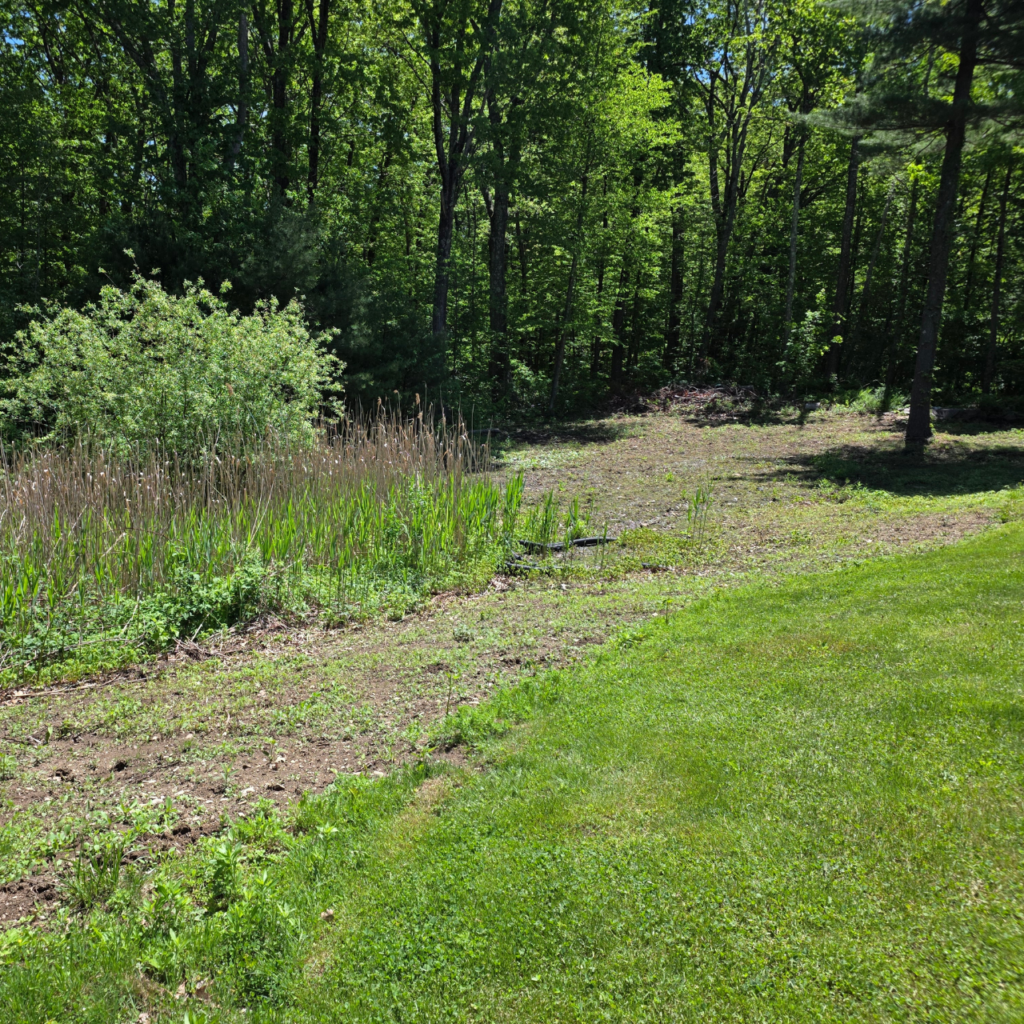
Every property has the same weak points. Fence lines and property edges go first, because nobody mows the last three feet. Old fields and meadows follow, turning from grass to brambles to sapling thicket in under a decade. The transition zones where lawn meets woods creep inward a foot or two every year. And any corner of the lot out of sight of the house quietly becomes a thicket. Brush clearing is usually a campaign against these zones, reclaiming the edges so the usable part of the property stops shrinking.
Overgrowth is more than a cosmetic problem. Brush harbors ticks in a state where Lyme disease is a serious concern, hides drainage problems until they mature into expensive ones, chokes out the trees worth keeping, and pulls property value down with every season it advances. Reclaiming it is one of the highest-visibility improvements a Central Massachusetts property can get for the effort involved.
The regional growth cycle explains why the problem never stays solved on its own. A New England growing season puts several feet of new growth on unmanaged ground every year, and the species that colonize first, bittersweet, buckthorn, multiflora rose, autumn olive, are the aggressive ones that outcompete everything homeowners would rather have. Left alone for five years, a mowable field becomes a project; left for fifteen, it becomes a forestry job. The economics favor acting at the thicket stage rather than the woodland stage, which is a polite way of saying the best time was five years ago and the second best time is this season.
How the Clearing Work Happens
A brush clearing job starts with a walk-through that marks what stays: specimen trees, plantings, stone walls, boundary markers, and anything the machines need to respect. Then the heavy removal happens, machine work through the open sections, hand cutting in the tight spots. Roots are grubbed or ground where the plan calls for mowable ground. Finally the surface is raked, smoothed, and left ready for whatever comes next: seed, mulch, or simply regular mowing.
Access decides the equipment, and Central Massachusetts properties test that constantly. A wide field takes a machine with a mulching head and goes fast. A backyard reachable only through a gate takes compact equipment and more time. Sloped, stony ground, which this region has in abundance, takes an operator who reads terrain instead of fighting it.
What Happens to the Debris
Cleared brush has to go somewhere, and the answer shapes the job. Chipping on site turns brush into mulch that can stay on the property, often the most practical route. Hauling removes everything for a clean finish. Mulch-in-place machines grind standing brush directly into the ground surface, clearing and disposing in one pass. Open burning, the traditional New England answer, is now limited to a permitted winter season in most Massachusetts towns and banned in some cities, so modern projects mostly plan around chipping and hauling instead.
Keeping Cleared Ground Clear
The clearing is the beginning; the maintenance plan is what makes it permanent. Ground converted to mowable grass stays clear with routine mowing. Mulched areas need a refresh every couple of seasons. Edges want an annual pass before saplings thicken beyond mower territory. A property owner who budgets one light maintenance day a year after a clearing never has to buy the full job twice, which is the whole economics of the work in one sentence.
When Brush Clearing Pairs With Other Work
Brush clearing rarely travels alone. Reclaiming an overgrown corner often reveals the yard drainage problem the thicket was hiding, which is why clearing and grading frequently share a project. Fence line clearing naturally precedes fence repair or replacement. Field reclamation pairs with regrading and seeding to turn recovered ground into lawn or meadow. And when brush clearing is the first step toward a shed, garage, or addition, it hands off to site preparation and residential excavation on the same visit. Bundling the ground work saves mobilization and gives one operator the full picture of the property instead of three contractors seeing thirds of it.
The reverse pairing matters too: brush clearing is often the affordable first move on a property with bigger plans. Clearing the growth lets you actually see the land, its slopes, its wet spots, its usable areas, before committing to designs drawn over a thicket. More than one Central Massachusetts building project has been redesigned for the better after the brush came off and the real ground appeared.
In Massachusetts, Watch Out for These
The Wetlands Protection Act is the big one. Massachusetts restricts clearing within buffer zones around wetlands, streams, and ponds, generally 100 feet, and local conservation commissions enforce it. Clearing near anything wet on the property map deserves a check before the machines arrive. The state’s open burning rules are the second: brush burning is limited to a permitted winter season in most towns and prohibited in the more densely built cities, which is why disposal planning matters up front.
The practical hazards are local too. Poison ivy threads through Central Massachusetts brush almost universally, and clearing it releases oils that reach skin through clothing and equipment. Tick pressure in overgrown ground is severe in this region. And old barbed wire, dumped fill, and forgotten stone piles hide inside mature thickets, which is one more reason experienced operators walk the ground before machines touch it.
Frequently Asked Questions
What is brush clearing?
Brush clearing is the removal of undergrowth, brambles, saplings, and low woody growth that takes over unmanaged ground. It returns overgrown areas to usable, maintainable land without the full tree removal of land clearing. Most projects clear edges, fields, fence lines, and neglected corners of a property.
Do I need a permit for brush clearing in Central Massachusetts?
Usually not for routine clearing of upland brush on your own property. The exception is anywhere near wetlands, streams, or ponds, where the Massachusetts Wetlands Protection Act restricts work within buffer zones. A contractor familiar with local conservation rules knows when a project needs a conversation with the town first.
What happens to the brush after clearing?
It gets chipped on site, hauled away, or in some cases mulched back into the ground. Open burning of brush is limited to a permitted winter season in most Massachusetts towns and banned outright in some cities, so most residential projects plan on chipping or hauling rather than burning.
When is the best time of year for brush clearing in Massachusetts?
Late fall through early spring is ideal: growth is dormant, ground visibility is best, and nesting season is avoided. Winter clearing on frozen ground also protects lawns from equipment marks. Summer clearing works fine for smaller jobs, it just fights thicker growth.
Will cleared brush grow back?
Yes, unless the roots are addressed or the area is maintained. Brush cut at ground level regrows from the root systems left behind. Clearing that includes grubbing roots, mulching deep, or converting the area to mowable ground is what keeps a property from repeating the same job in three years.
Brush clearing pays back the same way every time: ground you can actually use, edges that stop advancing, and a property that looks cared for from the road. Our Central Massachusetts land clearing team handles brush clearing across Grafton, Worcester, Shrewsbury, Northborough, and the surrounding towns, and estimates are always free. Request a free estimate and we will walk the overgrown parts of your property with you.