Central Massachusetts Gravel Installation & Driveways

" D&M helped us with my yard clearing and leveling project. They cleared about 3000 square feet of trees and brush, expanding the yard in about two days. It was money well spent. I will be having them come back in the fall to level the yard with loom and plant grass. I like D&M because they are local, do good work, they responded very quickly and the pricing was very fair. I would highly recommend
Durable Surfaces Built To Last
From gravel driveways and parking areas to shed pads, greenhouse pads, and access roads, we install stable stone surfaces designed for drainage, durability, and everyday use.
- Gravel Driveway Installation
- Driveway Extensions & Widening
- Gravel Parking Areas
- Stone Access & Farm Roads
- Shed & Outbuilding Pads
- Greenhouse Pads
- Gravel Resurfacing & Top-Ups
- Gravel ResurfaStone Surface Improvements & Top-Ups
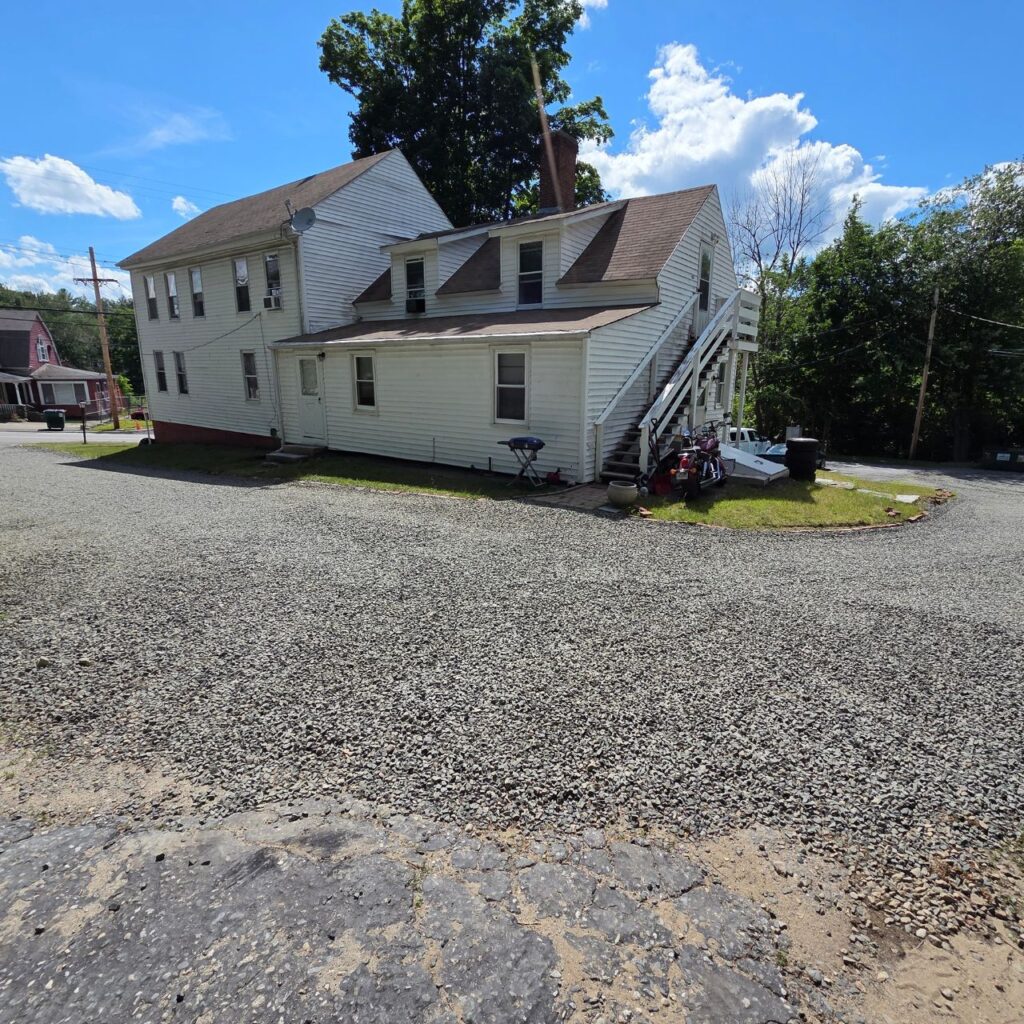
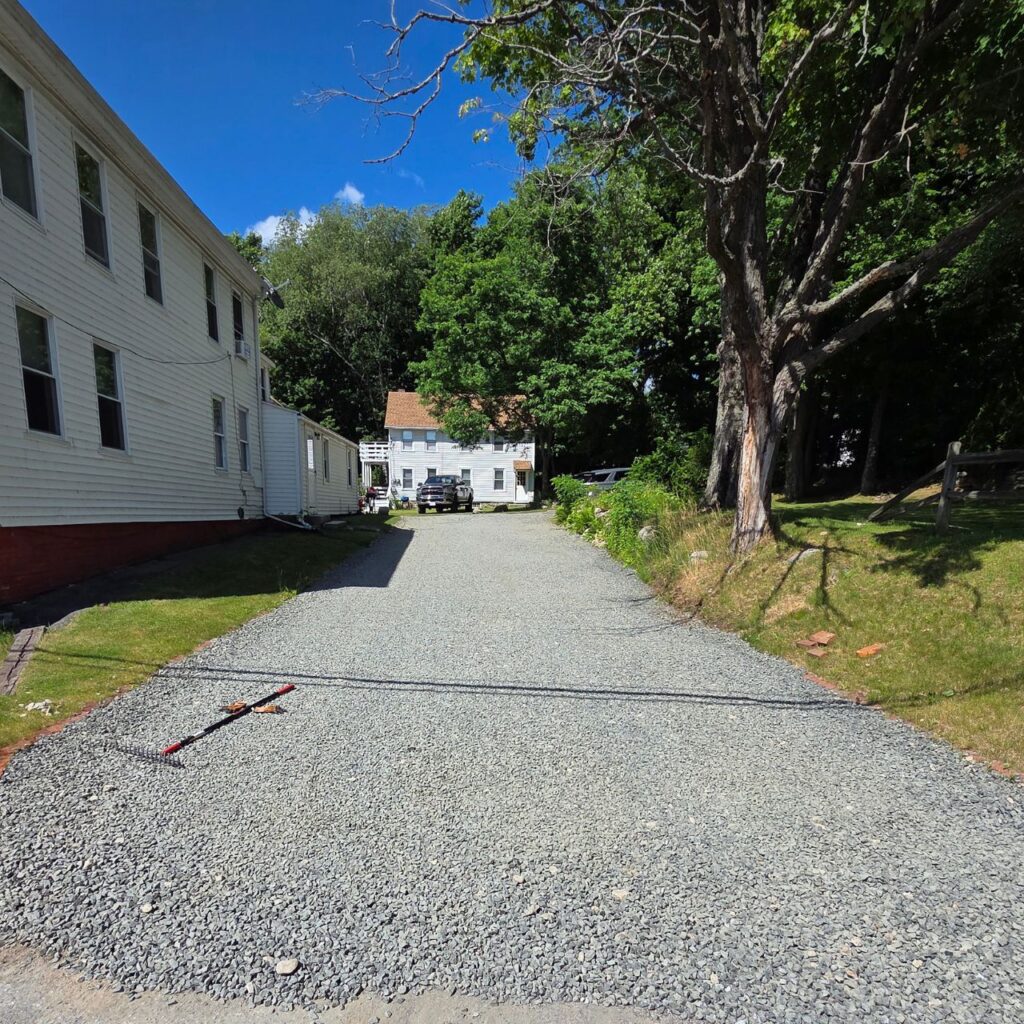
Gravel Installation & Driveways
Central Massachusetts Gravel Installation & Driveways
A gravel surface is a built structure, not a pile of stone. The ones that stay firm through mud season have compacted layers underneath, a shape that sheds water, and edges that let it escape. D&M Good Construction installs gravel driveways, parking areas, access roads, and building pads throughout Central Massachusetts, including Grafton, Worcester, Shrewsbury, and Northborough, built in proper layers on ground prepared to carry them. New England freeze-thaw is hard on every surface; gravel done right is the one that flexes with it instead of cracking.
Gravel Driveway Installation
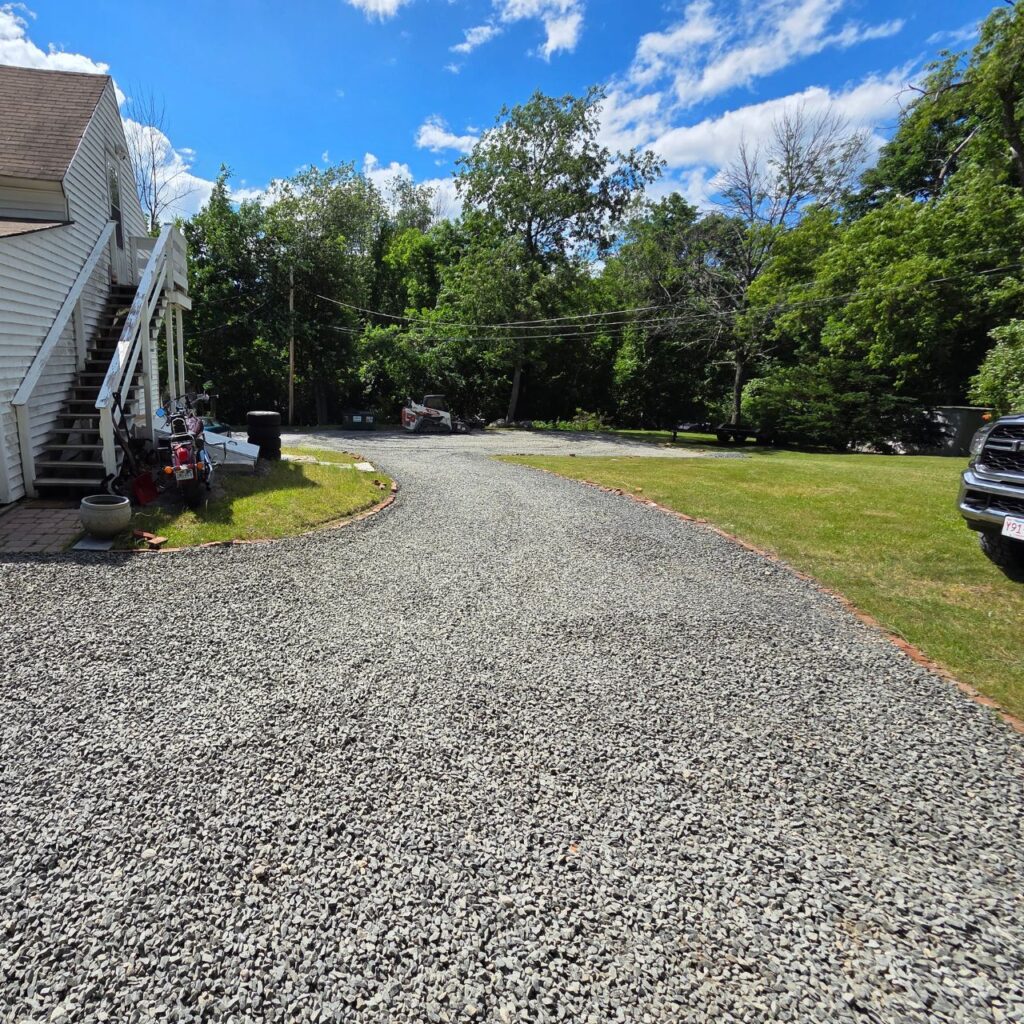
A gravel driveway that lasts is built in three layers. The subgrade comes first: topsoil stripped, ground shaped and compacted, and geotextile fabric laid down where soft soil would otherwise swallow stone over time. The base goes next, several inches of large crushed stone that carries the load and lets water pass through instead of pooling. The surface finishes it, a tighter crushed gravel with fines that lock together under compaction into a firm, drivable crust with a crown that sheds rain to the edges. Skip the base or use rounded stone that never locks, and a driveway develops ruts and potholes within a couple of seasons. Build all three correctly and it outlasts every paved alternative.
Driveway Extensions & Widening
Driveways get outgrown. A second driver, a camper, a work truck, or a turnaround that would end the backing-into-the-road ritual all ask for more surface than the original driveway offers. Extending or widening gravel is one of its best tricks: new sections tie into existing ones seamlessly when the base is built to match, with no seams or cold joints like paving. We build turnarounds, parking bump-outs, second lanes, and full extensions, matched to the existing surface and pitched so the new section sheds water as well as the old one. The finished result reads as one driveway, not an addition.
Gravel Parking Areas
Parking areas take concentrated, repeated loads in the same spots, which makes the base layer even more important than in a driveway. We build gravel parking pads for homes, home businesses, trailers, campers, and equipment, sized for the vehicles they will actually hold and pitched so water drains off rather than ponding under parked tires. Edges get defined so the area keeps its shape, and transitions to lawn or driveway get feathered so mowing and plowing stay easy. A well-built gravel parking area is the cheapest square footage of usable property a homeowner can add.
Stone Access & Farm Roads
Back fields, wood lots, barns, and building sites all need a way in that works in every season. A stone access road is a compacted, crowned, drained gravel surface built to carry trucks and equipment through ground that would rut under a lawn tractor. The route matters as much as the construction: following the natural high ground where possible, crossing wet spots with proper material instead of hoping, and pitching every section to shed water. Where a route approaches wetlands or streams, the Massachusetts Wetlands Protection Act can apply, and we check before building. We build farm roads, equipment access, and long private drives that stay passable in March, which is the only month that really tests a road in New England.
Shed & Outbuilding Pads
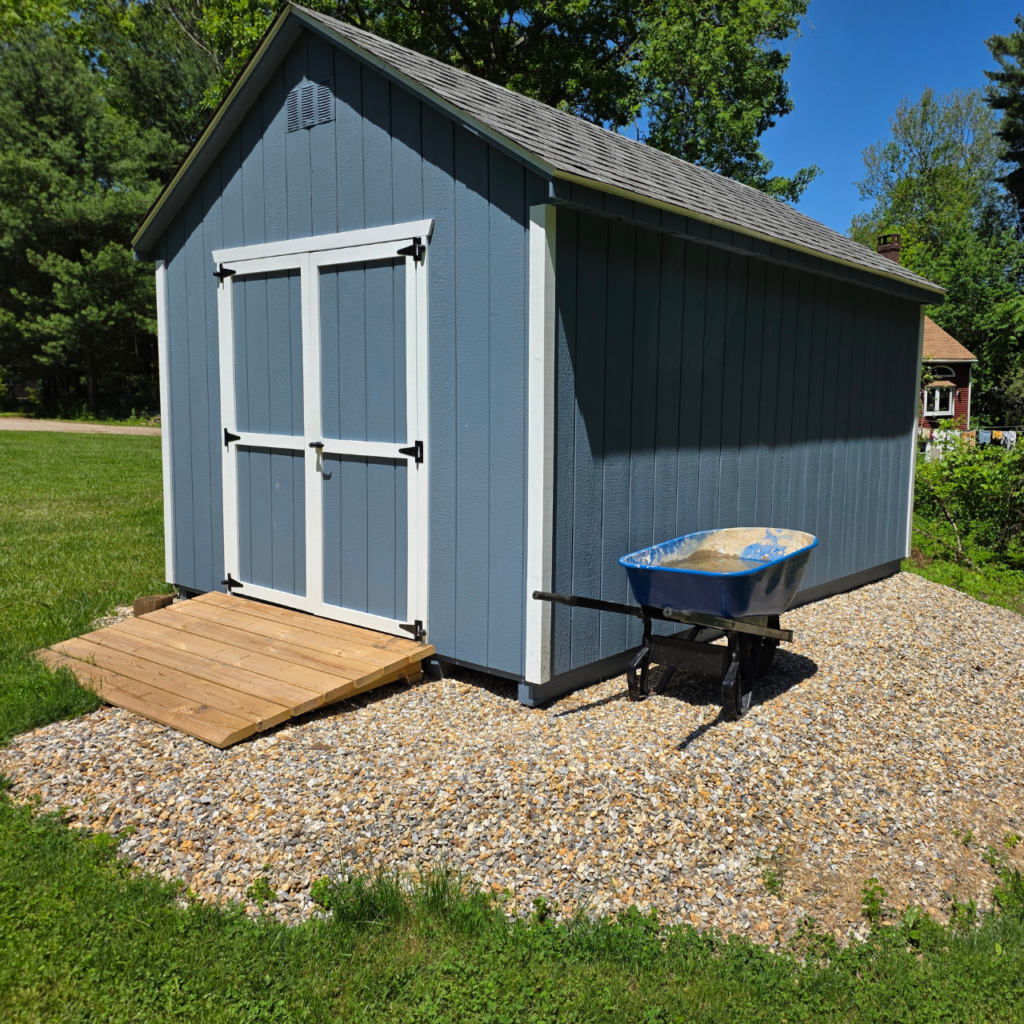
A shed is only as square as the pad under it. We build gravel pads for sheds, garages, and outbuildings by stripping the organic soil, excavating to firm subgrade, and rebuilding with compacted structural stone pitched just enough to drain. The result is a base that holds the building level through freeze-thaw cycles, keeps the floor dry by letting water pass under and away, and meets the pad requirements most shed manufacturers set for their warranties. Tell us the building dimensions and we size the pad correctly, typically extending beyond the structure’s footprint so roof runoff drips onto stone instead of digging a trench around your new building.
Greenhouse Pads
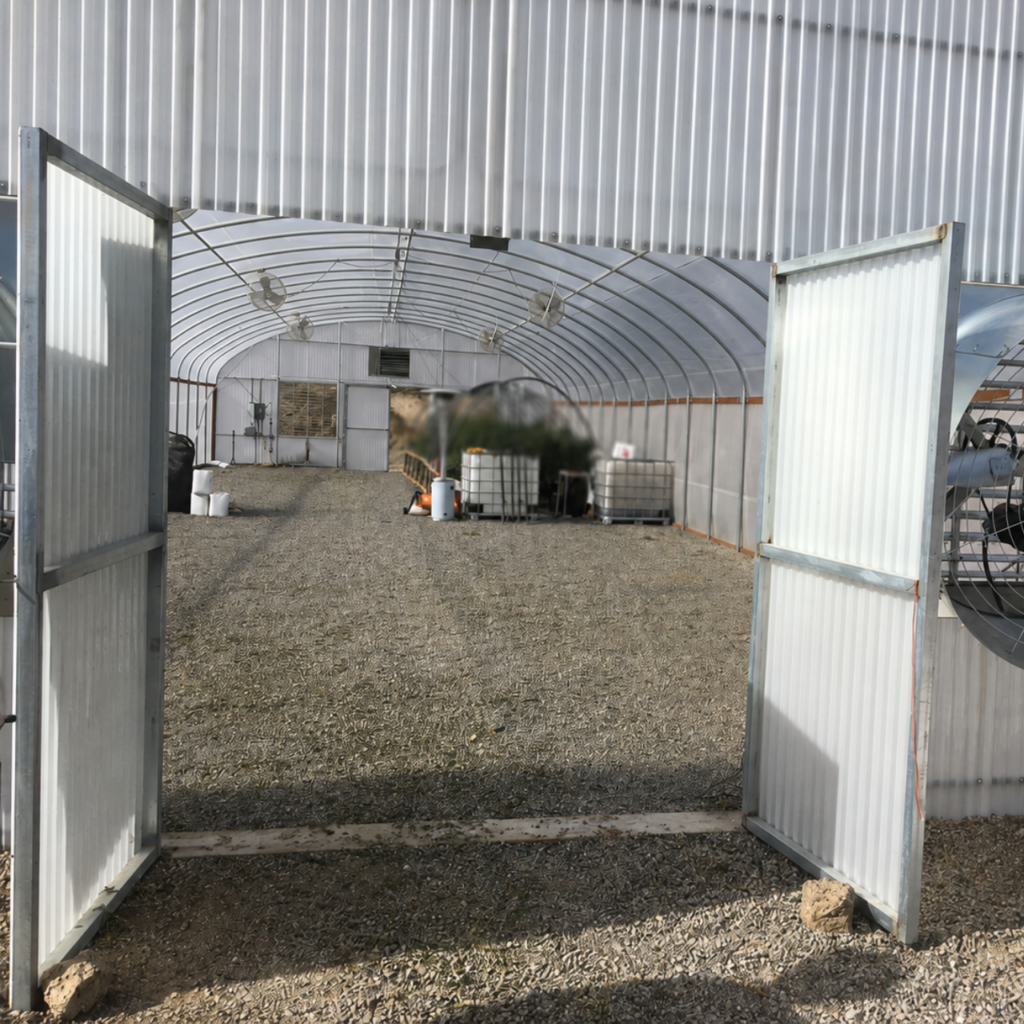
Greenhouses ask more of a pad than sheds do: they need level precision for the frame, drainage that handles both rain and watering runoff, and a surface that stays workable year-round. A compacted gravel pad delivers all three, which is why growers prefer them under hoop houses and glass alike. We build greenhouse pads level to the frame manufacturer’s spec, with a stone depth that drains freely and edges that keep the pad contained. For larger growing operations, we combine pads with the access roads and parking a working property needs, all built to the same standard.
Gravel Resurfacing & Top-Ups
Gravel surfaces consume their top layer slowly: fines wash and dust away, stone migrates, and after a few years the surface thins until the base starts showing through. A top-up adds fresh surface gravel before that happens, bonded to the existing material by grading and compaction rather than just dumped on top. Timing matters: resurface while the base is still sound and the job is quick; wait until the base is compromised and the job becomes a rebuild. If your driveway is more than a few years old and has never been topped up, a quick look tells us which side of that line you are on.
Stone Surface Improvements
Beyond driveways and pads, crushed stone solves everyday property problems: a firm path to the wood pile, a dry strip along a foundation where grass will not grow, a mud-free dog run, a defined edge between lawn and treeline, a clean floor under decks and stairs. These smaller stone surface improvements use the same materials and the same standards as our bigger installs, and they often ride along with a larger project at little added effort since the machines and material are already on site. If there is a corner of the property that stays muddy or messy, there is usually a stone answer for it.
Request A Free Estimate
Whether you need a new gravel driveway, a parking area, a pad for the next building, or a stone surface that finally solves a muddy corner, we build them the same way every time: proper base, proper shape, proper drainage. Request a free estimate and we will walk the site, measure it honestly, and give you a plan built to last.
Common Questions
Here are some frequently asked questions about our Gravel Installation & Driveway services.
How long does a gravel driveway last?
Indefinitely, when it is built in proper layers and maintained. An annual regrade and a fresh lift of surface gravel every few years keep it solid. Unlike paving, there is no end-of-life replacement; the surface renews instead of wearing out.
What kind of gravel is best for a driveway?
Crushed angular gravel with fines, commonly sold as dense-grade or three-quarter-inch minus. The fines lock the stones together when compacted into a firm crust. Rounded pea stone never locks and stays loose, which is why it belongs in walkways and drainage, not driveways.
How long does a gravel driveway installation take?
Most residential installations take one to three days once material is scheduled, depending on length and ground conditions. Soft ground that needs fabric and extra base, or long access roads, run longer. We give you a real timeline after walking the site.
Can a gravel driveway be plowed in winter?
Yes. Raise the blade about an inch or fit plow shoes, and any gravel that ends up in the lawn gets pulled back with spring grading. Sand works better than salt for ice, and a properly crowned driveway ices less in the first place because water is not sitting on it.
Do you build pads for sheds and greenhouses?
Yes. We build compacted gravel pads sized to the structure, typically extending past its footprint, leveled to the manufacturer’s spec, and pitched to drain. A proper pad keeps the building level and dry through New England freeze-thaw, and it is a requirement for many shed warranties.