
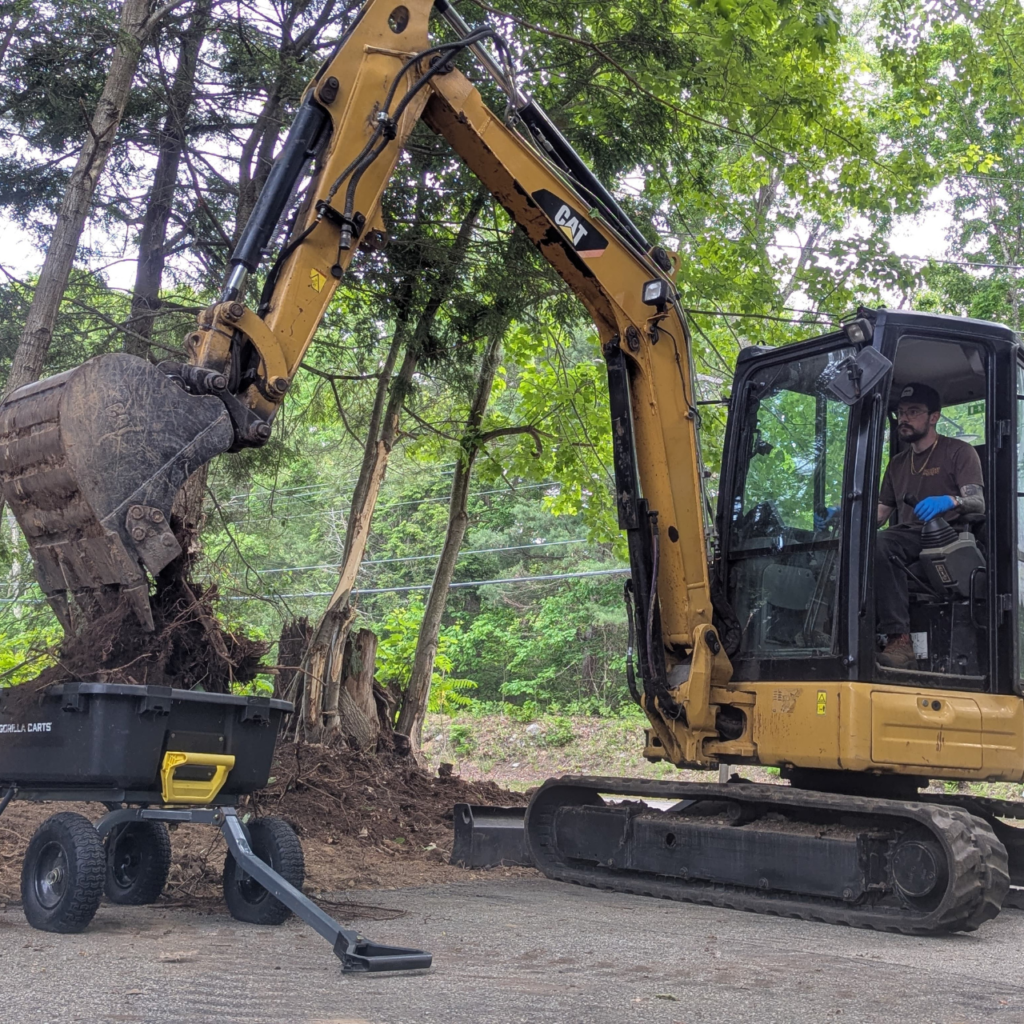
Sapling removal is the work of pulling out young trees and thin trunks, roots and all, before they mature into a full stand of woods on ground you want to use. It is one of the first steps in the land clearing and site preparation we do across Central Massachusetts. Left alone, a few saplings along a field edge or a back corner become an impassable thicket in a handful of seasons, so good sapling removal takes them out early, at the root, while the job is still small.
What Is Sapling Removal, Exactly?
A sapling is a young tree, usually a few feet to a dozen feet tall, with a trunk still thin enough to bend. It is the clearing of that young growth along with the small brush and thin trees that come up with it. Because the trunks are slim, the work looks easy from the road, but the real job is below the surface. Cutting a sapling at the ground only invites it to sprout back, so proper removal pulls the whole root ball so the growth does not return next spring.
On most residential jobs a compact excavator does this work. The machine grips a young trunk low, rocks it, and lifts it out with the roots attached, or grubs a whole patch of saplings and brush at once. The result is open, usable ground instead of a wall of young trees closing in.
Why Small Trees and Saplings Take Over a Lot
In New England, open ground does not stay open. A lawn edge that goes unmowed, a fence line nobody trims, or a lot that sits idle for a couple of years fills in fast with young growth. Wind and birds drop seeds, and species like maple, birch, and invasive buckthorn sprout thick because there is nothing shading them out yet. Within three or four years those seedlings are head high, and the easy job has turned into real clearing.
That is why the work is worth doing early. Taking out young trees while the trunks are still thin and the roots are shallow is far simpler than felling mature trees later. Homeowners in Grafton and Northborough often call once the growth has crept in from the property line and started to shade the yard or block a view they used to have.
How Sapling Removal Is Done
Sapling removal starts with a walk of the area to mark what stays and what goes. Not every young tree comes out; a healthy specimen worth keeping gets flagged and worked around. From there the operator brings in the excavator and clears the marked growth, gripping and lifting the saplings so the roots pull free rather than snap off underground.
For a dense patch, the machine grubs the brush and small trees together, scraping the tangle of stems and roots into piles as it goes. This is the same close, selective clearing we describe in our guide to brush clearing, just aimed at the woodier growth. Once the growth is out, the ground is raked and graded so what is left is clean, level, and ready to seed, fence, or build on.
Pulling the Roots, Not Just Cutting the Top
The difference between clearing that lasts and clearing that grows back is the root. Many young trees, and nearly all invasive shrubs, resprout with a vengeance when they are only cut at ground level. One buckthorn stump can send up a dozen new shoots in a single season. Pulling the root ball out is what makes removal permanent, and it is the reason a machine that can grip and lift beats a saw for this kind of work.
Grubbing the roots also opens the soil for whatever comes next. A lot cleared down to bare, workable ground can be graded for a lawn, a garden, a shed pad, or a fence run without a maze of buried stumps and roots fighting the shovel. That clean start is the whole point of doing the job right.
Clearing Fence Lines, Field Edges, and Overgrown Yards
Most sapling work falls into a few familiar jobs. A fence line that has grown into a hedge of young trees needs the growth pulled so the fence can be seen, repaired, or replaced. A field or lawn that is shrinking as the woods creep in from the edges gets its border pushed back to where it belongs. And an overgrown yard on a newly bought property gets reclaimed so the owner can actually use the land they paid for.
Each of these ties into the wider site prep on a property. Reclaiming an edge often leads straight into regrading, seeding, or a new gravel area, which is why sapling removal is usually the opening move of a larger project rather than a job on its own. Homeowners in Shrewsbury and Worcester frequently pair it with drainage or driveway work once the ground is open.
What Happens to the Brush and Debris
Clearing young growth produces a surprising volume of material, and dealing with it is part of the job. The pulled saplings, brush, and root balls are stacked and separated as the work goes, so the woody material can be chipped, hauled off, or piled for the property owner, depending on what makes sense for the site. Leaving a mountain of tangled brush behind is not finishing the job.
How the debris is handled also depends on local rules. Open burning is tightly regulated in Massachusetts and only allowed in certain towns during a set season with a permit, so hauling or chipping is usually the cleaner path. A good crew sorts and clears the debris so the finished ground is genuinely usable, not just cut.
In Massachusetts, Watch Out for These
The biggest thing to check before any sapling removal is where the wetlands are. Under the Massachusetts Wetlands Protection Act, work within 100 feet of a wetland, stream, or vernal pool falls inside a protected buffer zone, and clearing there can require filing with the local conservation commission first. What looks like a scrubby, wet back corner may be exactly the ground the law is meant to protect. You can review the basics through the state’s guide to protecting wetlands.
Grubbing roots also disturbs the soil, so if the work runs near a driveway, utility, or property line, the buried lines have to be marked first. Massachusetts law requires calling Dig Safe at 811 at least 72 business hours ahead, not counting weekends or holidays, before that kind of digging begins; the Dig Safe program explains the rules. Between the wetland buffer and the utility marks, sapling removal in Central Massachusetts is one of those jobs that goes smoother when the checking happens before the machine arrives.
Frequently Asked Questions About Sapling Removal
What is the difference between sapling removal and tree removal?
Sapling removal targets young, thin trees and small brush that can be gripped and pulled out with their roots by a compact machine. Full tree removal deals with mature trunks that must be felled in sections and stumped separately. Because saplings are small and shallow rooted, removing them early is faster and less disruptive than waiting until they are full grown trees.
Will the saplings grow back after they are removed?
Not if the roots come out. Cutting a sapling at ground level often makes it resprout, and invasive shrubs like buckthorn come back thicker. Proper sapling removal pulls the whole root ball so the growth does not return, which is why a machine that grips and lifts is used instead of just a saw.
Do I need a permit for sapling removal in Central Massachusetts?
It depends on where the work is. Clearing your own open yard usually does not, but if the growth is within 100 feet of a wetland, stream, or vernal pool, the Massachusetts Wetlands Protection Act may require filing with your town conservation commission first. In towns like Grafton and Worcester, checking with the local conservation office before clearing is the safe move.
How overgrown is too overgrown for sapling removal?
Young growth is easiest to remove while the trunks are still thin and the roots are shallow, generally the first few years after a lot starts filling in. Once saplings mature into large trees the job shifts toward full tree and stump removal. The earlier an overgrown edge or field is addressed, the simpler and cleaner the sapling removal.
What happens to the brush and material after clearing?
The pulled saplings, brush, and root balls are stacked and sorted as the work goes, then chipped, hauled off, or piled for the property owner depending on the site. Open burning is tightly regulated in Massachusetts, so hauling or chipping the debris is usually the cleaner path to leaving genuinely usable ground behind.
Whether it is a fence line disappearing into young trees or a whole back lot vanishing under new growth in Grafton, Worcester, Shrewsbury, or Northborough, sapling removal is how you take the land back before the job gets hard. If you want a clear picture of the scope on your property, our estimates are always free. For the wider view of how this fits the trade, see our pillar guide on what land clearing and site preparation involves.