Property improvements are the projects that change how a house lives: kitchen and bathroom remodels, interior renovations, decks and porches, and the demolition and coordination that carry an idea from the first tear-out to the finished result. They are construction at household scale, and they succeed or fail on sequence and accountability.
Every homeowner knows a renovation story that turned into a saga. Almost all of them are sequence stories: trades out of order, nobody owning the schedule, and a punch list that outlived a season. This guide explains each kind of improvement and how professionals run them, the way our Central Massachusetts property improvement services run projects from demolition to finished results.
Kitchen Remodels
A kitchen remodel is a fixed sequence wearing a design project’s clothes: plan and order first, demolish only when the cabinets have an arrival date, do the rough plumbing and electrical while the walls are open, close and finish surfaces, then set cabinets, template and install counters, and finish the details. Every phase protects the one after it. The lead times on cabinets and counters set the real calendar, which is why experienced remodelers treat ordering as the start of construction, not the paperwork before it. Run in order, this property improvement is weeks of predictable work instead of months of surprises.
Bathroom Updates
Bathrooms concentrate more construction per square foot than any room in a house: plumbing, electrical, waterproofing, tile, and ventilation, all within arm’s reach of each other. What separates a bathroom that stays new from one that just looked new on day one is invisible at the ribbon cutting: correct substrates, waterproofing where it belongs, and licensed trade work behind the finishes. This property improvement scales from fixture and vanity swaps to full renovations, and the phase discipline scales with them, so the household’s most-used room is out of service for the shortest honest window. For a deeper look at this side of the work, see our full guide to bathroom remodels in Central Massachusetts.
Interior Renovations
Renovations bigger than one room, opening a floor plan, updating a dated interior, finishing unused space, follow the same law: phases in order, one owner of the schedule. Demolition tells the truth about the house, rough trades and inspections make the bones right, and surfaces and finish work close it out. The renovations that stall are almost never stopped by the work itself; they are stopped by handoffs, where one trade waits on another and nobody is accountable for the gap. Single-team property improvements exist to delete those gaps. For a deeper look at this side of the work, see our full guide to interior renovation in Central Massachusetts.
Decks & Porches
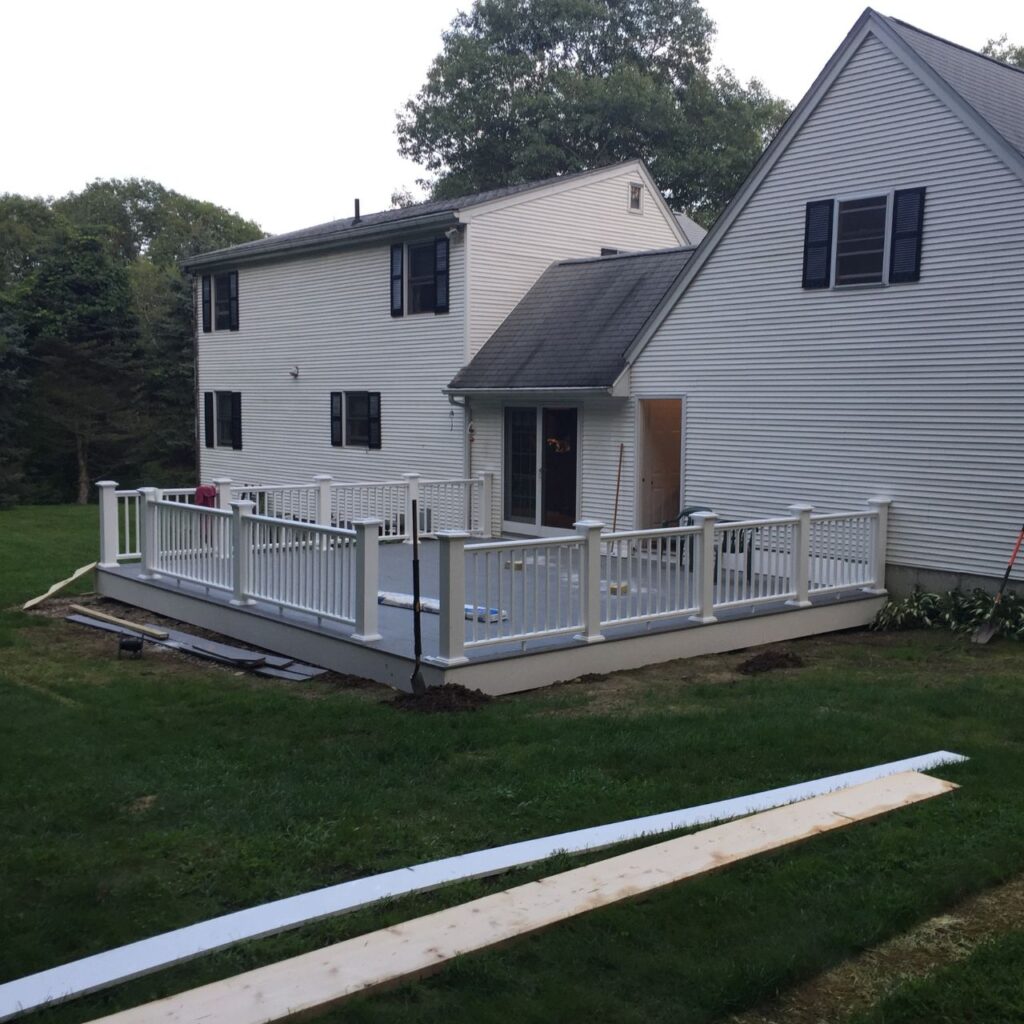
A deck or porch is a property improvement held to house standards: outdoor construction on the house’s terms. In Massachusetts that starts underground, with footings dug below the 48-inch frost line the Massachusetts State Building Code requires, so the structure cannot heave with the seasons. Framing, fasteners, and rails are code work; decking choice is a New England weather decision as much as a style one. Decks are also where dirt work and finish work meet, because a proper deck project begins with excavation and trenching and ends with trim, and companies that only do one half tend to subcontract their weakness. It is a short list of trades where doing both halves in-house shows. And when a deck is past repair, our guide to deck replacement covers how to know and what comes next.
Demolition & Tear-Outs
Every property improvement starts by removing something, and demolition quality decides how the rest of the project goes. Professional tear-outs are controlled: dust sealed off from the living space, utilities safely disconnected first, the surrounding structure protected, and debris hauled on schedule instead of aging in the driveway. When a tear-out chews up the driveway or parking area, restoring it is gravel installation work rather than finish work. Demo is also the diagnostic phase, since opening walls and floors reveals what the house has been hiding, and discovering it while everything is accessible is the cheap version of that discovery. The goal is simple: remove exactly what the project requires, protect everything it does not. For a deeper look at this side of the work, see our full guide to demolition and tear-out.
Flooring & Finish Work
Finish work is the last stretch of any property improvement and the part you touch every day after: flooring, trim, doors, paint, and hardware, aligned and complete. It is famously where projects drag, because by finish week the excitement is gone and whoever is finishing was often not accountable for the promise. Keeping finish work with the team that ran the whole project keeps the punch list short and owned. The standard is simple to say and rare to see: finished means the last item is done, not almost. For a deeper look at this side of the work, see our full guide to flooring replacement.
Full Project Coordination
The most valuable property improvement on many projects is invisible: one plan, one schedule, one accountable call. Coordination means permits pulled and inspections tracked, licensed plumbers and electricians sequenced so no trade waits on another, materials ordered against real lead times, and the site kept livable for the family in it. It is the difference between a project that touches five trades and feels like five projects, and one that feels like a single company kept a single promise. That is the actual product behind the phrase from demolition to finished results. For a deeper look at this side of the work, see our full guide to project coordination.
In Massachusetts, Watch Out for These
Three things catch Massachusetts homeowners. First, permits: structural, plumbing, and electrical work runs through your town’s building department, and decks and porches need frost-depth footings to pass inspection, so permit tracking belongs inside the project plan. Second, older housing stock: homes built before 1978 require lead-safe renovation practices, which changes how demolition and sanding are done and who is qualified to do them. Third, lead times: cabinets, counters, and specialty materials set schedules more than labor does, and the projects that start before materials are secured are the ones that stall mid-kitchen. Our property improvement team builds all three into the plan before demolition day.
Frequently Asked Questions
What counts as a property improvement?
The finish side of construction: kitchen and bathroom remodels, interior renovations, decks and porches, demolition, and the coordination that carries a project to the finished result. Land-side work like clearing, grading, and drainage is its own category of site services.
Do home renovations need permits in Massachusetts?
Most do. Structural, plumbing, and electrical work is permitted through your town’s building department, and outdoor structures like decks need footings below the 48-inch frost line to pass inspection. On a well-run project, permits and inspections are managed for you.
What should be decided before demolition starts?
Everything with a lead time: layout, cabinets, counters, flooring, fixtures, and appliances, with the long-lead items actually ordered. The strongest projects are fully decided before the first tear-out, because mid-project changes are where budgets and schedules go to die.
How do I renovate an older home safely?
Homes built before 1978 require lead-safe work practices during renovation, which affects demolition, sanding, and cleanup methods. It is a real requirement, not a formality, and it is one of the first questions to ask anyone bidding work on an older house.
Why hire one company instead of separate trades?
Sequence and accountability. Renovations stall in the handoffs between trades, not in the work itself. One team owning the schedule, the permits, and the punch list removes the gaps, which is usually worth more than any single trade’s price difference.
If your house has a project it has been waiting on, our Central Massachusetts property improvement services take it from demolition to finished results with one accountable team. Request a free estimate and tell us what you are imagining.